Address
304 North Cardinal St.
Dorchester Center, MA 02124
Work Hours
Monday to Friday: 7AM - 7PM
Weekend: 10AM - 5PM

Address
304 North Cardinal St.
Dorchester Center, MA 02124
Work Hours
Monday to Friday: 7AM - 7PM
Weekend: 10AM - 5PM

PACKING YOUR SUCCESS
PACKING YOUR SUCCESS
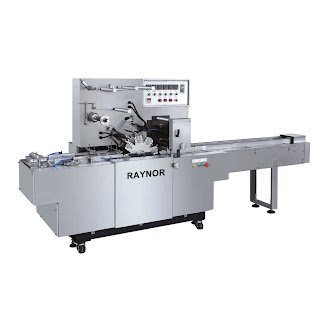
Have you ever noticed the crisp, transparent film tightly wrapped around a new box of cigarettes, a perfume carton, or a tea caddy? That elegant, wrinkle‑free outer layer is the work of a cellophane packaging machine — also known as an overwrap machine, 3D packaging machine, or flow overwrapper.
At RAYNOR Packaging, based in Kunshan, China, we manufacture precision cellophane
overwrapping machines and palletizing robots for global brands. In this
guide, we will explain what cellophane packaging is, how the machine
works, where it is used, and why Kunshan has become a trusted source for
this specialized equipment.

A
cellophane packaging machine (or overwrap machine) wraps a product in a
thin, transparent film — traditionally cellophane (regenerated
cellulose) but today more commonly polypropylene (PP) or biodegradable
films. Unlike shrink wrapping, which uses heat to shrink film tightly
around a product, overwrapping applies the film as a neat, lap‑sealed
envelope that does not require shrinking.
The
result is a premium, dust‑proof, and often tamper‑evident package that
looks like a “second skin”. Because the finish is exceptionally clear
and smooth, overwrapping is widely used in the tobacco, pharmaceutical,
cosmetic, tea, confectionery, and electronics industries.


The process is elegant and continuous. Modern overwrap machines perform four main actions in one automated cycle:
A
roll of film (cellophane, polypropylene, or other heat‑sealable
material) is unwound and folded around the product as it enters the
machine.
The film is cut to the precise length, and a lap seal
is created — the two edges of the film overlap and are heat‑sealed
together on the bottom or side of the package. This is different from a
fin seal (common in shrink wrap) and produces a smoother, more
aesthetically pleasing seam.
The
two open ends of the film are folded (gusseted) to lie flat against the
product, then sealed with heated jaws. This creates the characteristic
“folded ends” seen on cigarette packs or soap cartons.
The finished, tightly wrapped product is ejected onto a conveyor belt or directly into a collection bin.
High‑speed automatic machines can achieve 30–80 packs per minute or even higher, depending on product size and film type.
| Feature | Cellophane (Traditional) | Polypropylene (BOPP) | Shrink Wrap (POF/PE) |
|---|---|---|---|
| Material clarity | Excellent, but less durable | Superior clarity and gloss | Very good |
| Moisture barrier | Moderate | Excellent | Good |
| Heat sealing | Requires careful temperature control | Very easy, wide sealing range | Easy |
| Biodegradability | Yes (wood‑based) | No | Limited |
| Typical use | Cigarettes, luxury goods | Tea, cosmetics, CDs, biscuits | Bundling, unitizing, irregular shapes |
Today, most “cellophane packaging machines” actually run BOPP film
(biaxially oriented polypropylene) because it is stronger, cheaper, and
seals more reliably — but the machinery design remains the same.


The classic application. Cigarette packs are overwrapped to preserve freshness, lock in aroma, and provide tamper evidence.
Medicine
boxes, syrup cartons, and medical device trays are overwrapped to
protect against dust, moisture, and tampering — especially important for
over‑the‑counter products.
Luxury
tea caddies, instant coffee jars, and premium tea bag boxes are often
overwrapped with transparent film. This keeps the product fresh and
showcases the brand.
Perfume
cartons, lipstick sets, soap bars, and gift boxes gain a “store‑shelf
ready” premium finish that both protects and attracts.
Chocolate
boxes, biscuit tins, and candy packs — the crisp overwrap keeps them
from absorbing moisture or odors from the environment.
USB
drive boxes, printer cartridge packs, and sticky note pads are
frequently overwrapped for dust protection and retail presentation.
The classic “cello wrap” on a CD jewel case has been produced by these machines for decades.
A properly cellophane‑wrapped package should have four clear characteristics:
Crystal clarity – The film is virtually invisible, allowing the product’s graphics to shine through without distortion.
Smooth, flat ends – The gusseted ends lie flat against the product with no excess film, creating a professional “tight” appearance.
Strong lap seal – The bottom or side seal is barely noticeable and will not split during handling.
Tamper evidence – Once the film is torn open, it cannot be resealed without obvious damage.
Customers
perceive an overwrapped product as higher quality. It signals that the
product has been carefully handled and protected from factory to shelf.
Historically, overwrapping machinery was developed in Europe and Japan. Companies such as Sapal (Switzerland) , Cavanna (Italy) , Ilapak , and Omori (Japan) have been leaders for decades.
However, over the past 10–15 years, China has emerged as a major manufacturing hub for overwrap machines. Chinese manufacturers now produce machines at a more competitive price point
— typically 40–60% lower than equivalent European or Japanese models —
while matching them in reliability, speed, and energy efficiency.
According to industry estimates, Chinese‑built overwrap machines now hold an estimated 30% of the global market for mid‑range and entry‑level automatic overwrappers, with exports growing 15–20% annually.
Kunshan,
a city in Jiangsu Province, has become one of China‘s most advanced
manufacturing centers for packaging machinery. It is home to over 200
packaging equipment manufacturers, supported by a complete supply chain
of precision machining, control systems, and stainless steel
fabrication.
Advantages of sourcing from Kunshan include:
Mature ecosystem – All components (sealing jaws, heater bands, gearboxes, PLC controllers) are available locally, reducing lead times.
Skilled workforce – Kunshan has a high density of mechanical and electrical engineers with many years of packaging machine experience.
Logistics hub
– The city is located near Shanghai’s ports and airports, making export
shipping fast and cost‑effective to North America, Europe, Southeast
Asia, and the Middle East.
Quality recognition – Many Kunshan‑built machines now carry CE, UL, or ISO 9001 certifications, meeting international safety and quality standards.
RAYNOR Packaging
operates from Kunshan, where we design and manufacture cellophane
overwrap machines, shrink packaging systems, and palletizing robots. Our
overwrap machines are built to handle BOPP, cellophane, and
biodegradable films at speeds from 20 to 80 packs per minute, with PLC
control and touchscreen operation.
Ask yourself these questions:
Do I need to protect individual cartons or boxes from dust and moisture?
Do I want a premium, shelf‑ready appearance without the cost of a custom box?
Does my product require a tamper‑evident outer wrap?
Am I currently using hand‑applied film or cellophane bags that slow me down?
If the answer to any of these is “yes”, an automatic cellophane overwrap machine can:
Reduce packaging labor by 70–90% compared to hand wrapping.
Improve product shelf life with a consistent moisture barrier.
Increase perceived product value — a crisp overwrap is a sign of quality.
The
cellophane packaging machine — whether you call it an overwrap machine,
3D wrapper, or flow overwrapper — is one of the most under‑appreciated
workhorses of the consumer goods industry. It transforms ordinary boxes
into retail‑ready products that look fresh, stay clean, and resist
tampering.
If
you are packaging cigarettes, tea, cosmetics, pharmaceuticals, biscuits,
or any other cartoned product, an overwrap machine could be the
simplest upgrade to your production line.
Ready to see how a RAYNOR overwrap machine can improve your packaging line?
We build reliable, high‑speed cellophane wrappers right here in Kunshan, China, and export to customers worldwide.
📞 Contact us at raynorpack.com for a quote or technical discussion.
📍 RAYNOR Packaging — Engineered in Kunshan, Delivered Global.
